281-647-7766

Visit Us410 West Grand Parkway South
Suite #4C, Katy, TX 77494
Suite #4C, Katy, TX 77494
Office HoursMon – Thu: 8:30 AM – 5:00 PM
Fri: 8:30 – 4:00 · Sat: 9:00 – 1:00
Fri: 8:30 – 4:00 · Sat: 9:00 – 1:00
281-647-7766
Home/Cancer Treatment/Gastric (Stomach) Cancer
Stomach cancer often starts with symptoms that feel like ordinary indigestion. Board-certified oncologists Dr. Mohammad Riaz and Dr. Shagufta Naqvi provide chemotherapy, immunotherapy and targeted therapy in Katy, and coordinate surgery with experienced Houston surgeons. Same-day appointments for newly diagnosed patients.
Overview
Stomach cancer develops slowly over years, usually from precancerous changes in the stomach lining. About 9 in 10 stomach cancers are adenocarcinomas. Less common types include lymphoma (MALT), gastrointestinal stromal tumors (GIST) and neuroendocrine tumors, which are treated differently.
Doctors also describe where the cancer starts: in the main part of the stomach, or at the gastroesophageal (GE) junction, where the esophagus meets the stomach. Location, stage and tumor biomarkers all guide treatment. Read more about stomach cancer symptoms.
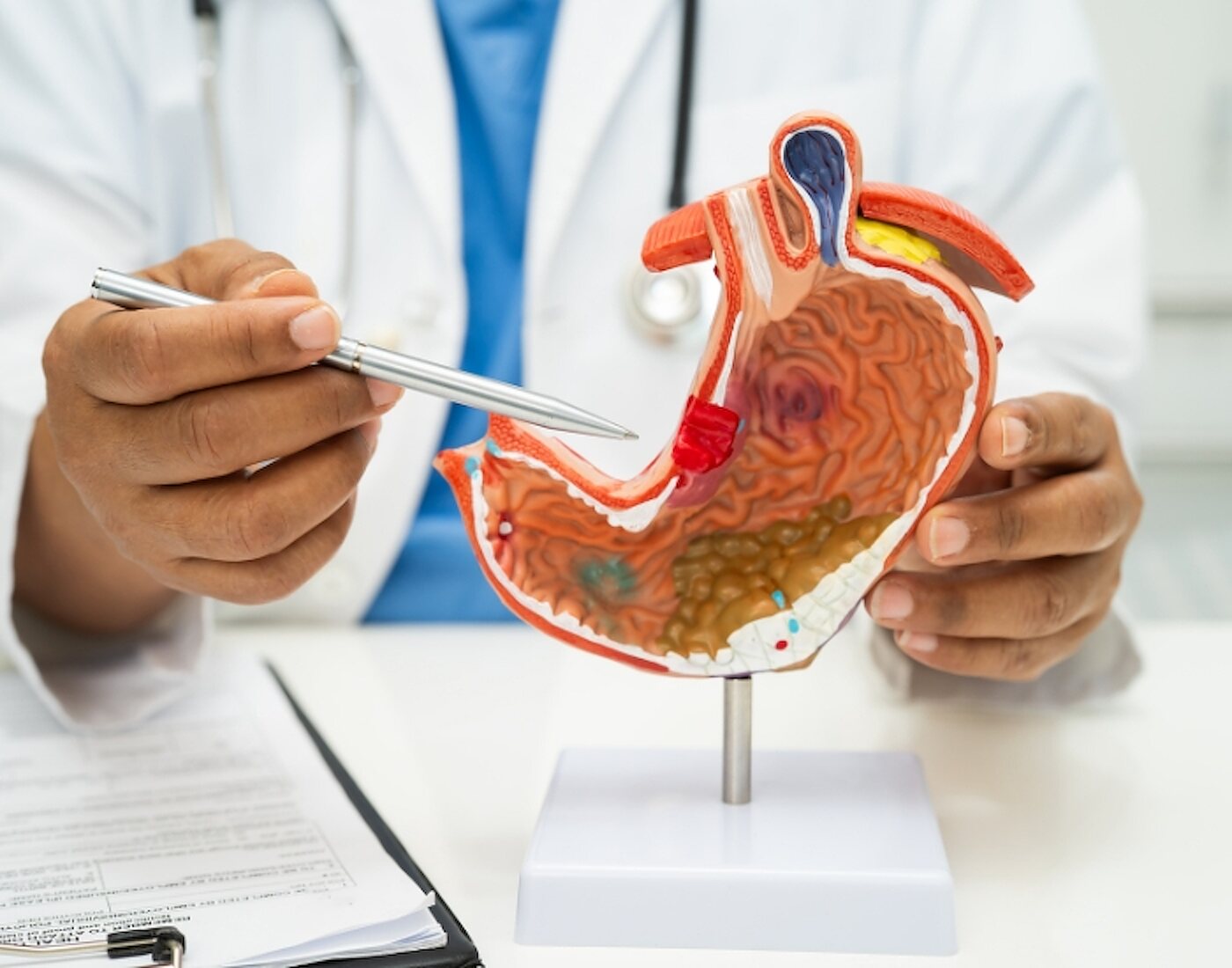
Early stomach cancer often causes vague symptoms: indigestion or heartburn, feeling full after eating very little, loss of appetite, nausea and pain in the upper belly. Later signs include unexplained weight loss, vomiting, trouble swallowing, black or tarry stools and anemia.
Most of these symptoms are caused by ulcers, gastritis or reflux. If they last more than two weeks, or you are over 55 with new indigestion, see a doctor about an endoscopy.
The most important risk factor is long-term infection with Helicobacter pylori bacteria. Other risks include smoking, a diet high in salted, smoked or pickled foods, older age, male sex, family history, inherited syndromes such as hereditary diffuse gastric cancer (CDH1) and Lynch syndrome, and previous stomach surgery.
See also stomach cancer symptoms in women.
An upper endoscopy with biopsy confirms the diagnosis. CT scans of the chest, abdomen and pelvis, and often endoscopic ultrasound, PET scan or diagnostic laparoscopy, show how far it has spread. Stages range from I (inner layers only) to IV (spread to distant organs or the abdominal lining).
These biomarkers decide whether you may benefit from trastuzumab, immunotherapy or zolbetuximab, so we make sure they are tested early.
Very early cancers can sometimes be removed through the endoscope. Most operable cancers are treated with FLOT chemotherapy before and after surgery to remove part or all of the stomach. Advanced stomach cancer is treated with chemotherapy combined with immunotherapy or targeted drugs chosen by your tumor’s biomarkers.
FLOT (5-FU, leucovorin, oxaliplatin, docetaxel) given before and after surgery shrinks the tumor and lowers the chance of recurrence.
Used for: Stage IB to III operable cancer
Partial or total gastrectomy with removal of lymph nodes, performed by an experienced surgical oncologist we coordinate with.
Used for: Localized cancer
Nivolumab or pembrolizumab added to chemotherapy for advanced cancer, especially when PD-L1 is high or the tumor is MSI-high.
Used for: Advanced or metastatic cancer
Trastuzumab with chemotherapy (and sometimes pembrolizumab); trastuzumab deruxtecan in later lines.
Used for: HER2-positive cancer
Zolbetuximab added to chemotherapy for tumors that are Claudin 18.2-positive and HER2-negative.
Used for: Advanced cancer
Nutrition support, nausea and pain control, and help with eating after gastrectomy.
Used for: Every patient
When stomach cancer is found before it spreads, about 75% of people are alive five years later. Because most cases are found at a later stage, overall five-year survival is about 36%. Newer immunotherapy and targeted treatments are helping more people with advanced disease live longer.
Outlook depends on stage, whether the cancer can be completely removed, biomarkers and overall health. Read about stage 4 stomach cancer survival.
After gastrectomy, eat six to eight small meals a day, chew well, limit sugary foods and drink liquids between meals rather than with them to avoid dumping syndrome. Many people need vitamin B12, iron and calcium supplements. We work with dietitians to keep your weight stable.
Weight loss is common with stomach cancer. We monitor your weight and labs at every visit, treat nausea and pain, and adjust your plan if eating becomes difficult. Dr. Riaz’s Cleveland Clinic palliative care training means symptom control is part of every treatment plan.
Call 281-647-7766 or request a call back. Newly diagnosed patients can usually be seen the same day. We accept most major insurance plans and Medicare, including AARP, Aetna, Blue Cross Blue Shield of Texas, UnitedHealthcare, Tricare and TMHP, and our staff handles prior authorizations before treatment begins.
Bring your referral, biopsy or pathology report, recent scans and lab results, a list of your medicines and your insurance card. If you do not have every record, call anyway. Our team can request them for you. You can also fill out our patient registration form ahead of time.
Board-Certified Medical Oncologist
Dr. Naqvi brings years of experience treating a wide range of cancers with a focus on personalized medicine, patient advocacy and compassionate care.
Board-Certified Medical Oncologist & Palliative Care Specialist
Dr. Riaz completed a Palliative Medicine Fellowship at the Cleveland Clinic, so patients receive cutting-edge cancer therapy while keeping the highest possible quality of life.
Our oncology office is located at 410 West Grand Parkway South, Suite #4C, Katy, TX 77494, with easy access from I-10 and the Grand Parkway. Patients come to us for stomach cancer care from Katy, Cinco Ranch, Fulshear, Richmond, Sugar Land, Memorial, the Energy Corridor, West Houston and communities throughout Greater Houston.
Hours: Monday–Thursday 8:30 AM–5:00 PM · Friday 8:30 AM–4:00 PM · Saturday 9:00 AM–1:00 PM
Phone: 281-647-7766 · Fax: 281-647-7767 · Map & directions
Yes, when it is found early and can be completely removed with surgery, often combined with chemotherapy. Advanced stomach cancer is usually not curable but can often be controlled with modern treatment.
Long-term H. pylori infection is the leading cause of stomach cancer worldwide. Testing for and treating H. pylori lowers your risk.
Usually not. Most indigestion is caused by reflux, ulcers or gastritis. Indigestion that is new after age 55, lasts more than a few weeks, or comes with weight loss, vomiting or black stools should be checked with an endoscopy.
Yes. After a total gastrectomy, the esophagus is connected to the small intestine. People adapt by eating smaller, more frequent meals and taking vitamin B12.
HER2 is a protein found on some stomach cancers. HER2-positive tumors can be treated with trastuzumab and related drugs, so every advanced stomach cancer should be tested.
Premier Oncology Consultants treats stomach cancer at 410 West Grand Parkway South, Suite #4C, Katy, TX 77494, serving Katy, Fulshear, Richmond, Sugar Land, Memorial and West Houston.
Sources
This page is for education only and does not replace medical advice from your own physician. Treatment decisions should be made with your care team based on your individual diagnosis.
Same-Day Appointments in Katy
Same-day consultations for newly diagnosed patients, in-office treatment and most insurance accepted, in Katy, serving all of Greater Houston.
Same-Day Appointments · Katy, TX
Share your details and our Katy team will call you back, usually the same business day.
Please do not include detailed medical information. Your details are used only to contact you about your appointment.