



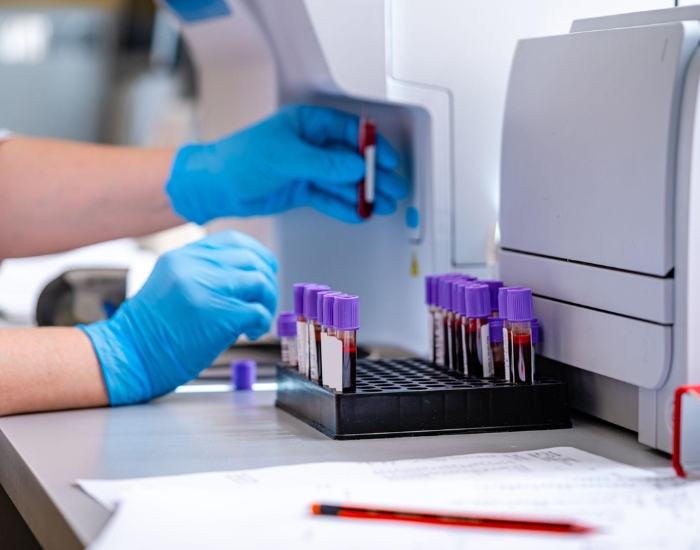
An abnormal CBC can look frightening when you see words such as “high,” “low,” or “out of range” on your laboratory report. It is natural to wonder whether something serious is happening, especially if your doctor recommends seeing a hematologist. But an abnormal CBC does not automatically mean cancer, and one unusual number rarely tells the whole story. The important question is why the result is abnormal, whether it persists, and whether it occurs alongside other blood-test changes or symptoms.
Important Note
An abnormal CBC is a finding, not a diagnosis. Changes in red blood cells, white blood cells, platelets, or hemoglobin can happen for many reasons, including infections, inflammation, nutritional deficiencies, medications, chronic conditions, and temporary changes in your health. A hematologist can help determine whether the result needs monitoring, additional testing, or treatment—and can investigate more serious causes when appropriate.
What Is a CBC and What Does It Measure?
A complete blood count, commonly called a CBC, is one of the most frequently ordered blood tests in medical care. It provides information about several types of blood cells and can give doctors clues about anemia, infection, inflammation, bleeding problems, immune conditions, and disorders affecting blood-cell production.
A CBC typically measures red blood cells, white blood cells, platelets, hemoglobin, hematocrit, and several additional red-cell measurements. A CBC with differential also provides information about different types of white blood cells, such as neutrophils, lymphocytes, monocytes, eosinophils, and basophils.
Because the test provides so much information, an abnormal CBC can mean many different things. A low hemoglobin level raises different questions than a high white blood cell count. Likewise, a low platelet count requires a different evaluation from an elevated platelet count.
This is why it is usually not helpful to look at one number in isolation. Your healthcare professional considers the complete pattern, your symptoms, your medical history, medications, previous blood tests, and the laboratory’s reference ranges.
What Does an Abnormal CBC Mean?
An abnormal CBC means that one or more measurements fall outside the reference range reported by the laboratory. That does not necessarily mean something is wrong with your health.
Reference ranges are developed from populations of people considered healthy, and values can naturally vary between individuals and laboratories. Age, sex, pregnancy, altitude, hydration, medications, recent illness, and other factors can influence blood counts.
Sometimes a result is only slightly outside the laboratory’s range and has little clinical significance. In other situations, a result may be substantially abnormal or may remain abnormal when tested repeatedly. The latter situation may deserve closer attention.
Your doctor may also become more interested when several CBC measurements are abnormal at the same time. For example, anemia combined with a low platelet count or unusual white blood cell findings may require a different level of investigation than an isolated, mild change.
The key question is not simply, “Is my CBC abnormal?” It is, “Why is my CBC abnormal, and does the pattern require further evaluation?”
When Should You See a Hematologist for an Abnormal CBC?
You may need to see a hematologist when an abnormal CBC is persistent, unexplained, significant, associated with concerning symptoms, or involves multiple blood-cell types.
Your primary care doctor may initially repeat the test or investigate common causes. If the abnormality does not resolve or the cause remains unclear, a hematologist can provide more specialized evaluation.
A hematology referral may also be appropriate when the CBC suggests a possible disorder involving blood-cell production, blood clotting, the immune system, or the bone marrow.
For example, unexplained anemia that continues despite initial evaluation may warrant hematology assessment. Similarly, persistently high or low white blood cell counts, unexplained platelet abnormalities, or unusual combinations of blood-count changes may lead to a referral.
Another reason for referral is when the abnormal result occurs alongside symptoms such as persistent fatigue, recurrent infections, unexplained bruising, unusual bleeding, enlarged lymph nodes, unexplained fevers, night sweats, or unexplained weight loss.
However, even these symptoms do not automatically indicate a blood cancer. They can occur with many other medical conditions. A hematologist’s role is to investigate the possibilities rather than assume the most serious explanation.
Which CBC Abnormalities May Need Evaluation?
Low hemoglobin or anemia
Hemoglobin carries oxygen throughout the body. When the hemoglobin level is low, you may have anemia.
Anemia is extremely common and can result from iron deficiency, vitamin deficiencies, blood loss, chronic disease, kidney problems, inherited conditions, inflammation, or other causes. In some cases, however, the reason is not immediately obvious.
You may be referred to a hematologist when anemia is persistent, severe, recurrent, unexplained, or accompanied by other abnormal blood counts.
Symptoms can include fatigue, weakness, shortness of breath with activity, dizziness, headaches, or reduced exercise tolerance. The severity and symptoms vary considerably from person to person.
High white blood cell count
White blood cells help your immune system respond to infections and other threats. A high white blood cell count can occur during infections, inflammation, physical stress, medication use, and other conditions.
Sometimes the elevation is temporary and returns to normal after the underlying issue resolves. If the count remains high without an obvious explanation, your doctor may want a more detailed evaluation.
The differential portion of a CBC can be particularly useful because it shows which types of white blood cells are increased. The pattern can help physicians determine what possibilities should be considered next.
Low white blood cell count
A low white blood cell count can also have many causes. Certain medications, viral infections, nutritional deficiencies, autoimmune conditions, and other medical problems may reduce white blood cell numbers.
When white blood cells remain unusually low or the reduction is significant, a hematologist may evaluate whether the bone marrow is producing cells appropriately and whether another underlying condition needs attention.
High platelet count
Platelets are involved in blood clotting. A high platelet count can sometimes occur as a response to infection, inflammation, iron deficiency, blood loss, or another underlying condition.
Persistent or unexplained elevation may require further evaluation to determine whether the increase is reactive or related to a disorder affecting blood-cell production.
Low platelet count
A low platelet count can increase the risk of bleeding when the reduction is significant. Possible causes include medications, infections, immune conditions, liver or spleen disorders, and conditions affecting the bone marrow.
If your platelet count is unexpectedly low, your doctor may repeat the CBC or perform additional testing to determine whether the result is genuine and what may be causing it.

Does an Abnormal CBC Mean Cancer?
No. An abnormal CBC does not automatically mean cancer.
This is one of the most important points to understand if you have recently received an abnormal result. Blood counts can change for numerous reasons that are unrelated to cancer.
Some cancers, particularly certain blood cancers, can cause abnormal CBC findings. Leukemia, for example, affects blood-forming tissues and can lead to unusual blood-cell patterns. Some lymphomas and other cancers can also affect blood counts indirectly.
But the same CBC abnormality may occur in someone who has an infection, nutritional deficiency, inflammatory condition, medication effect, or another noncancerous problem.
That is why a hematologist does not diagnose cancer based on one CBC number. Instead, the physician evaluates the entire pattern and determines whether additional tests are needed.
If your doctor referred you to hematology because of an abnormal CBC, try not to interpret the referral itself as a diagnosis. Think of it as a request for a more specialized medical assessment.
Important Note
Seeing an abnormal result in your patient portal can make your mind jump immediately to the worst possibility. Take a breath before drawing conclusions. “High” or “low” does not tell you why the result changed, and many abnormalities have treatable or temporary causes. Your medical history, symptoms, previous results, and the pattern across the CBC all matter.
What Symptoms Can Make an Abnormal CBC More Concerning?
Many people with abnormal CBC results have no symptoms at all. In fact, a CBC is often performed during a routine physical, preoperative evaluation, or investigation for an unrelated concern.
When symptoms are present, however, they can provide useful clues about whether the blood abnormality needs additional evaluation.
Persistent or unusual fatigue
Fatigue is common and can result from poor sleep, stress, infections, anemia, thyroid problems, medications, and many other causes. If fatigue is persistent, unusually severe, or occurs alongside an abnormal CBC, your doctor may want to determine whether anemia or another blood-related problem is contributing.
Frequent or unusual infections
White blood cells play an important role in fighting infections. Repeated or unusually severe infections may prompt a doctor to examine the white blood cell count and differential more closely.
Unexplained bruising or bleeding
Unexpected bruising, frequent nosebleeds, unusually heavy menstrual bleeding, or other unexplained bleeding can sometimes be associated with platelet or clotting problems. These symptoms have many possible causes, but they deserve appropriate medical evaluation, particularly when a CBC is also abnormal.
Fever or night sweats
Fever is often related to infection, while night sweats can have several explanations. If these symptoms persist without an obvious cause and occur alongside abnormal blood counts, your doctor may recommend further evaluation.
Swollen lymph nodes
Enlarged lymph nodes commonly occur when your immune system is responding to an infection. However, persistent or unexplained lymph-node enlargement may require medical assessment, particularly when accompanied by other symptoms or abnormal laboratory findings.
Unexplained weight loss
Unintentional weight loss can occur for many reasons, including digestive problems, thyroid conditions, infections, medication effects, and changes in appetite. When it is persistent or occurs with other unexplained symptoms, it should be discussed with a healthcare professional.
How Does a Hematologist Investigate an Abnormal CBC?
A hematologist begins by asking a simple but important question: What is different about this person’s blood count, and why?
The physician reviews the actual CBC rather than relying only on the word “abnormal.” The degree of change matters. So does the specific blood-cell type involved.
Previous laboratory results can be especially helpful. If your hemoglobin has been mildly low for several years, the situation may be very different from a sudden and significant decline. Similarly, a temporary white blood cell increase during an infection may have a different meaning from a persistent elevation without an obvious cause.
The physician will also consider your medications, supplements, recent illnesses, chronic medical conditions, family history, diet, lifestyle factors, and symptoms.
Depending on the findings, the next step might simply be repeat testing. In other situations, the doctor may recommend additional laboratory studies, imaging, or specialized blood testing.
If there is concern about a condition involving the bone marrow, further evaluation may be necessary. The specific tests depend on the suspected condition and are not automatically required for everyone with an abnormal CBC.
What Tests Might a Hematologist Order?
The appropriate tests depend on what is abnormal and what the initial evaluation suggests.
A repeat CBC with differential is sometimes useful, particularly when the original result could have been temporary or when the doctor wants to see whether the abnormality persists.
A peripheral blood smear may be used to examine the appearance of blood cells under a microscope. Additional blood tests may evaluate iron, vitamin levels, kidney or liver function, inflammation, or other factors depending on the suspected cause.
In selected cases, specialized tests may be used to examine blood-cell populations or identify specific molecular or genetic changes. These tests are ordered when there is a clinical reason to investigate a particular condition.
A bone marrow biopsy may also be considered when the physician needs to evaluate blood-cell production directly. This is a specialized procedure and is not part of the routine workup for every abnormal CBC.
The goal is to use the least invasive and most informative evaluation appropriate for your situation.
What Happens During a Hematology Appointment?
Your first appointment may feel more like a detailed conversation than you expect. The hematologist needs to understand not only your laboratory results but also the story surrounding them.
Bring your recent blood-test reports and previous results if you have them. A complete list of medications, vitamins, and supplements is also helpful.
Your physician may ask when the abnormal CBC was discovered, whether you had been sick at the time, whether similar results occurred previously, and whether you have noticed symptoms such as fatigue, bruising, bleeding, fever, infections, night sweats, or unexplained weight changes.
You may also have a physical examination. Depending on the reason for the referral, this can include checking for swollen lymph nodes, examining the skin for signs of bruising, or looking for other findings relevant to your blood results.
Do not hesitate to ask the physician to explain unfamiliar terms. If your report says your neutrophils, lymphocytes, hematocrit, or platelets are abnormal, ask what that means in your specific situation.
A good consultation should leave you with a clearer understanding of what has been found, what remains uncertain, and what happens next.
When Should an Abnormal CBC Be Evaluated Urgently?
The urgency of an abnormal CBC depends on the specific result and your symptoms. A mildly abnormal result discovered during routine testing is very different from a severe blood-count abnormality accompanied by significant symptoms.
If you develop severe difficulty breathing, significant chest pain, fainting, sudden confusion, uncontrolled bleeding, or another potentially life-threatening symptom, seek emergency medical attention rather than waiting for a routine hematology appointment.
Likewise, if your doctor tells you that a blood-test result requires urgent follow-up, follow that recommendation even if you feel relatively well.
For less urgent abnormalities, arrange the recommended hematology appointment and bring your questions and previous laboratory results. Prompt follow-up is useful without assuming that the abnormality represents cancer.
What Should You Do After an Abnormal CBC?
Start by finding out exactly which part of the CBC was abnormal. Instead of simply thinking, “My blood test is bad,” ask your doctor which measurement changed and how significant the change is.
Next, find out whether the result needs to be repeated. Some abnormalities are temporary, particularly when they occur during or shortly after an infection or another acute illness.
Ask whether medications, supplements, nutritional deficiencies, recent illness, inflammation, or another known condition could explain the result.
If your physician recommends seeing a hematologist, make the appointment. A specialist can help determine whether the abnormality needs monitoring, additional testing, or treatment.
It is also helpful to avoid making major changes to your medications or supplements based solely on an online search. If you think something you are taking could be affecting your blood counts, discuss it with your healthcare professional first.

Hematology-Oncology Care in Houston and Katy
If you have an abnormal CBC and need specialized evaluation in the Houston area, Premier Oncology Consultants provides medical oncology care for patients in the greater Houston metropolitan area, including Katy.
Premier Oncology Consultants is located in Katy at 410 West Grand Parkway South, Suite 4C, Katy, TX 77494. The practice is led by board-certified medical oncologists Dr. Shagufta Naqvi and Dr. Mohammad Riaz.
You can learn more about the physicians through the Premier Oncology doctors page before your appointment.
When a blood abnormality requires broader cancer evaluation or treatment, Premier Oncology also provides comprehensive cancer treatment in Houston. Depending on the diagnosis, cancer care may involve chemotherapy, immunotherapy, hormone therapy, supportive care, or collaboration with surgeons and radiation specialists.
Patients who are already dealing with a cancer diagnosis can also explore the practice’s chemotherapy services to understand more about the treatment offered.
Have You Been Told Your CBC Is Abnormal?
You do not have to figure out what an abnormal blood count means by reading the numbers alone. A hematology-oncology evaluation can help put the results into context and determine whether additional testing is appropriate.
Request a consultation with Premier Oncology Consultants to discuss your blood-test concerns with an experienced oncology team serving Houston and Katy.
Frequently Asked Questions
What does an abnormal CBC mean?
An abnormal CBC means that one or more blood-count measurements fall outside the laboratory’s reference range. It may involve red blood cells, white blood cells, platelets, hemoglobin, or another CBC measurement. The finding can have many possible causes and does not automatically mean cancer.
When should I see a hematologist for an abnormal CBC?
You may need a hematologist when the abnormality is persistent, unexplained, significant, involves multiple blood-cell types, or occurs alongside concerning symptoms. Your primary care doctor may recommend repeat testing first or refer you directly depending on the results.
Can an abnormal CBC be caused by an infection?
Yes. Infections can change white blood cell counts and sometimes affect other blood measurements. Some changes resolve as the infection improves. Your doctor may repeat the CBC to determine whether the abnormality persists.
Does a high white blood cell count mean leukemia?
No. A high white blood cell count can occur for many reasons, including infections, inflammation, medications, physical stress, and other conditions. Leukemia is one possible cause of certain abnormal white blood cell patterns, but additional evaluation is needed to determine the cause.
Can low hemoglobin require a hematologist?
Yes. Anemia is common and often has causes that can be identified and treated in primary care. However, persistent, severe, recurrent, or unexplained anemia may warrant evaluation by a hematologist.
Can low platelets be serious?
It depends on how low the platelet count is, whether it is falling, whether you have symptoms, and what is causing the change. Low platelets have many possible causes. Significant or unexplained thrombocytopenia should be evaluated by a healthcare professional.
What happens if my CBC is abnormal but I feel fine?
You may still need follow-up because some blood abnormalities cause few or no symptoms. Your doctor may repeat the test, review previous results, or recommend specialist evaluation depending on the specific finding.
Will an abnormal CBC require a bone marrow biopsy?
Not necessarily. Most people with an abnormal CBC do not automatically need a bone marrow biopsy. The procedure is considered only when the clinical findings and other tests indicate that direct evaluation of the bone marrow may be useful.
Can a CBC detect cancer?
A CBC can provide clues that may lead a doctor to investigate certain cancers, particularly some blood cancers, but it cannot by itself diagnose most cancers. A cancer diagnosis generally requires additional clinical, laboratory, imaging, pathology, or other specialized evaluation.
Final Thoughts
Finding out that your CBC is abnormal can be stressful, but the result is a starting point for investigation rather than a conclusion. Blood counts can change because of infections, inflammation, nutritional deficiencies, medications, chronic conditions, and many other causes.
A hematologist becomes especially valuable when an abnormal CBC is persistent, unexplained, significant, or accompanied by other findings that need a closer look. The specialist can evaluate the complete pattern rather than focusing on one number.
If your doctor has recommended a hematology appointment, take the referral seriously without assuming the worst. Bring your laboratory results, medication list, medical history, and questions. With the right evaluation, you can find out what the abnormal CBC actually means and what, if anything, needs to happen next.
Medical Disclaimer
This article is intended for general educational purposes and does not replace personalized medical advice, diagnosis, or treatment. An abnormal CBC can have many possible causes, and only a qualified healthcare professional who evaluates your individual medical history, symptoms, and laboratory results can determine what the finding means. If you experience severe or potentially life-threatening symptoms, seek emergency medical care.