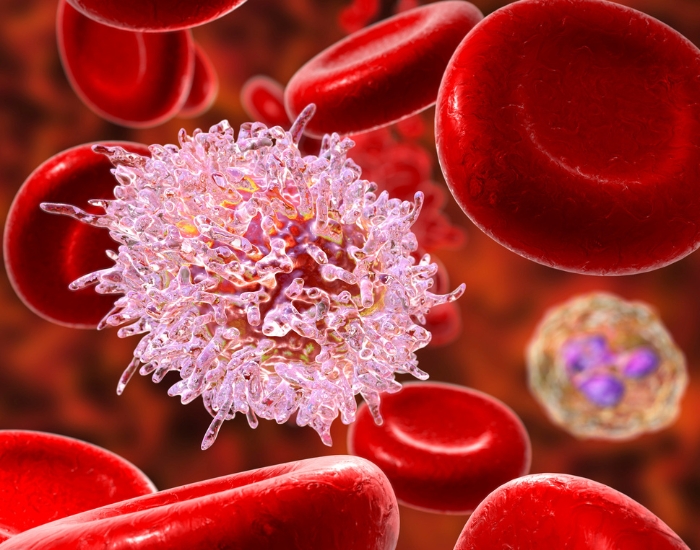



A high white blood cell count can be unsettling, especially when you see an abnormal result on a blood test without knowing what it means. It is natural to wonder, “Can a high WBC mean cancer?” The good news is that an elevated white blood cell count does not automatically mean cancer. In fact, infections, inflammation, stress, medications, and many other conditions can temporarily increase white blood cells.
At the same time, a persistently or significantly elevated WBC count can sometimes be associated with blood cancers such as leukemia or other disorders affecting the blood and bone marrow. That is why doctors look beyond one number. They consider the type of white blood cell that is elevated, how high the count is, whether the abnormality persists, and whether you have other symptoms or abnormal blood-test results.
Important Note
An abnormal white blood cell count is a finding, not a diagnosis. A high WBC can happen for many reasons that have nothing to do with cancer. However, if the result remains abnormal, occurs along with other concerning blood-test changes, or is accompanied by unexplained symptoms, it deserves appropriate medical evaluation. Understanding why the count is high can help you know what questions to ask and what the next step may be.
What Does a High White Blood Cell Count Mean?
A high white blood cell count, also called leukocytosis, means that there are more white blood cells circulating in your blood than expected for the laboratory’s reference range. White blood cells are an important part of the immune system. They help the body recognize and respond to infections, inflammation, and other threats.
When your immune system detects a problem, the bone marrow can increase production and release additional white blood cells into the bloodstream. This is a normal protective response in many situations. For example, someone with a bacterial infection may temporarily develop a higher WBC count while the body is fighting the infection.
The important question is therefore not simply, “Is my WBC high?” A doctor also wants to know why it is high.
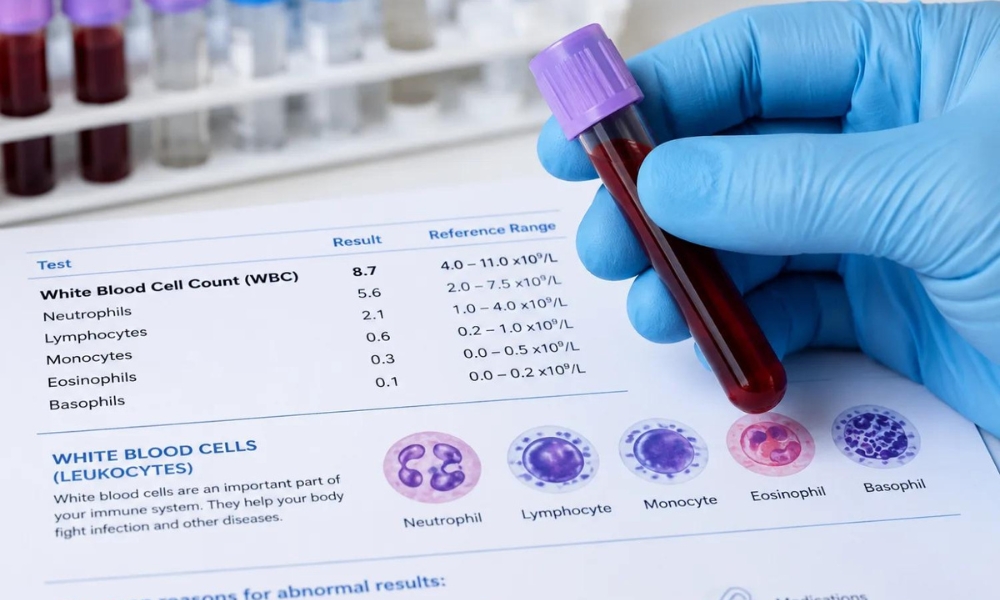
A complete blood count, or CBC, measures several components of the blood, including white blood cells, red blood cells, hemoglobin, hematocrit, and platelets. The white blood cell portion can also provide information about different types of immune cells. These include neutrophils, lymphocytes, monocytes, eosinophils, and basophils.
That distinction matters because an increase in one type of white blood cell can point toward different causes. For instance, neutrophils commonly rise during bacterial infections and inflammation, while lymphocyte abnormalities may occur with certain viral infections and some blood disorders.
One elevated result therefore needs context. A doctor may compare the current CBC with previous blood tests, review your symptoms and medications, and determine whether the abnormality is temporary or persistent.
What Is a Normal White Blood Cell Count?
There is no single WBC number that applies perfectly to every person. Laboratories use reference ranges, and those ranges can vary somewhat depending on the laboratory and testing method. In many adult laboratories, a typical white blood cell count falls somewhere around 4,000 to 11,000 cells per microliter of blood, although the exact reference interval on your report should be used when interpreting your result.
A result slightly above the laboratory’s upper limit does not necessarily indicate a serious disease. Your WBC count can change over time because of infection, physical stress, inflammation, certain medications, smoking, pregnancy, or other factors.
The degree of elevation is also only one part of the picture. A moderately elevated count during an obvious infection may be much less concerning than a persistent unexplained elevation accompanied by anemia, unusual platelet results, enlarged lymph nodes, unexplained bruising, or other symptoms.
This is why it is usually not helpful to compare your WBC number with someone else’s. The more useful question is how your result fits into your overall health and whether it changes over time.
In other words, a high WBC count should be interpreted as part of your complete blood picture rather than as a stand-alone cancer test.
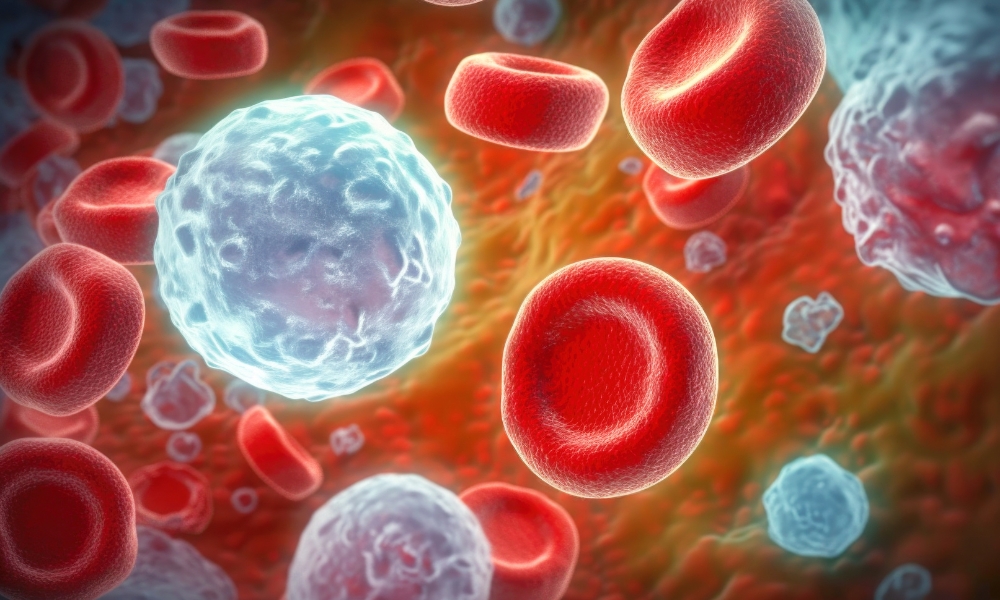
What Are the Common Causes of a High WBC Count?
There are many possible reasons for leukocytosis, and most are not cancer. The body can increase white blood cell production whenever the immune system needs additional support.
Infections
Infections are among the most common reasons for an elevated WBC count. Bacterial infections can particularly cause an increase in neutrophils, although viral and other infections can also change white blood cell levels.
You may have other signs of infection, such as fever, chills, cough, sore throat, urinary symptoms, abdominal discomfort, or localized pain. Once the infection improves, the WBC count may return toward its usual level.
Inflammation
Inflammatory conditions can also stimulate white blood cell production. Inflammation may occur with autoimmune diseases, tissue injury, inflammatory disorders, or other medical conditions.
In these situations, the elevated WBC count is part of the body’s response to inflammation rather than evidence of a cancerous process.
Medications
Some medications can affect white blood cell levels. Corticosteroids, for example, can cause an increase in circulating white blood cells. Other medications may influence the blood count in different ways.
This is one reason your doctor will ask about prescription medications, over-the-counter drugs, supplements, and recent changes in treatment when evaluating an abnormal CBC.
Physical or emotional stress
Significant physical stress can temporarily increase white blood cells. Surgery, strenuous physical stress, injury, and other acute situations may cause changes in the CBC.
Emotional stress can also influence certain blood-cell measurements, although it should not automatically be assumed to explain a persistently abnormal result.
Smoking and other factors
Smoking can be associated with higher white blood cell counts. Other factors, including pregnancy and certain chronic conditions, can also affect WBC levels.
Because there are so many possible explanations, an elevated WBC result should not be interpreted as a cancer diagnosis without further evaluation.
Can a High WBC Mean Cancer?
Yes, a high white blood cell count can sometimes be associated with cancer, but an elevated WBC count by itself does not mean you have cancer.
Some cancers, particularly cancers involving the blood and bone marrow, can cause abnormal white blood cell production. Leukemia is one important example. Certain lymphomas and other hematologic disorders can also affect white blood cell counts.
However, cancer is only one possibility among many. A doctor becomes more concerned when the elevated WBC is unexplained, persists over time, is unusually high, or occurs together with other abnormalities.
For example, a CBC showing an elevated WBC count along with unexplained anemia or an abnormal platelet count may prompt a more detailed evaluation than an isolated mild elevation during a documented infection.
The specific white blood cell type also matters. A high neutrophil count, high lymphocyte count, or high eosinophil count can have very different causes. Doctors may therefore look at the white blood cell differential rather than relying only on the total WBC number.
Important Note
It is easy to see the word “high” next to WBC on a laboratory report and immediately think of the worst-case scenario. Try not to make that leap from one test. Many common and treatable conditions can cause leukocytosis. If your doctor recommends repeat testing or a hematology evaluation, that does not necessarily mean cancer has been found. The purpose of the evaluation is to determine the reason for the abnormal result.
Which Blood Cancers Can Affect White Blood Cell Counts?
When an elevated WBC count is related to cancer, doctors may consider disorders that affect blood-forming tissues, particularly the bone marrow and lymphatic system. These conditions are collectively part of hematologic oncology.
Leukemia
Leukemia is a cancer involving blood-forming tissues, including the bone marrow. Depending on the type of leukemia, the bone marrow may produce abnormal blood cells that interfere with the production and function of normal blood cells.
Some forms of leukemia can cause very high white blood cell counts, while others may produce normal or even low WBC counts. This is important because the absence of a high WBC does not rule out leukemia, and a high WBC does not establish that leukemia is present.
Doctors may look for additional clues, including abnormal cells on a peripheral blood smear, changes in hemoglobin or platelets, and symptoms such as persistent fatigue, recurrent infections, unexplained bruising, or enlarged lymph nodes.
Lymphoma
Lymphoma begins in cells of the lymphatic system. Some people with lymphoma may have changes in their blood counts, although a high WBC count is not a universal finding.
Persistent swollen lymph nodes, unexplained fevers, drenching night sweats, unexplained weight loss, or ongoing fatigue may lead a physician to investigate further.
Myeloproliferative neoplasms
Myeloproliferative neoplasms are disorders in which the bone marrow produces too many blood cells. Depending on the specific condition, the abnormality may involve white blood cells, red blood cells, platelets, or a combination.
These disorders are less common than infections and other causes of leukocytosis, but they may become part of the differential diagnosis when blood counts remain persistently abnormal without an obvious explanation.
When Is a High WBC Count More Concerning?
A high WBC count deserves closer attention when there is no obvious temporary explanation or when it occurs with other concerning findings. The number itself matters, but the overall pattern matters more.
Doctors may want to investigate further if the WBC count remains elevated on repeat testing, continues to rise, or is accompanied by abnormalities involving other blood cells.
Symptoms can also provide important clues. Persistent or unexplained fatigue, frequent infections, unexplained fever, night sweats, unusual bruising or bleeding, swollen lymph nodes, bone discomfort, or unintentional weight loss should be discussed with a healthcare professional.
These symptoms do not automatically mean cancer. Many non-cancerous conditions can cause the same symptoms. Their importance is that they provide additional information that can help a doctor decide whether more testing is appropriate.
Likewise, a very abnormal CBC should not be ignored simply because you feel well. Some blood disorders can produce few noticeable symptoms in their early stages.
That is why follow-up testing is sometimes recommended even when you feel completely normal.
How Do Doctors Find the Cause of a High WBC Count?
The evaluation usually begins with your medical history, physical examination, and a careful review of the CBC. Your doctor may ask about recent infections, medications, smoking, chronic medical conditions, recent surgery or injury, and symptoms that could point toward inflammation or a blood disorder.
The next step may be a repeat CBC with differential. Repeating the test can help determine whether the elevated WBC was temporary or remains abnormal.
The differential provides additional information by showing the proportions and absolute numbers of different white blood cell types. This can help doctors understand whether neutrophils, lymphocytes, monocytes, eosinophils, or basophils are driving the elevation.
A peripheral blood smear may also be useful. During this test, blood cells are examined under a microscope to look for unusual cell shapes, immature cells, or other findings that may require further evaluation.
Depending on the results, doctors may order additional laboratory testing or imaging. If a blood or bone marrow disorder is suspected, a hematologist may recommend specialized tests to identify the underlying condition.
The key point is that there is no single blood test that can determine whether every case of high WBC is cancer. Diagnosis depends on combining the blood-test pattern with your medical history, examination, symptoms, and, when necessary, specialized testing.
When Should You See a Hematologist?
A hematologist specializes in conditions affecting the blood, bone marrow, and blood-forming organs. If a high white blood cell count remains unexplained, keeps appearing on repeat CBC tests, or occurs alongside other abnormal blood results, your primary care physician may recommend a hematology consultation.
A referral does not mean that cancer has been diagnosed. In many cases, the purpose of seeing a hematologist is simply to determine why the blood count is abnormal and whether additional testing is needed.
You may be referred when your doctor notices a persistent elevation in your WBC count, an unusual pattern in the white blood cell differential, abnormal cells on a blood smear, or multiple blood-count abnormalities. A hematologist can put these findings together and determine whether the cause is an infection, inflammation, medication effect, an immune-related condition, or a disorder involving the blood or bone marrow.
The decision is also influenced by your symptoms and medical history. For example, persistent unexplained fever, recurrent infections, unusual bruising or bleeding, enlarged lymph nodes, persistent night sweats, unexplained weight loss, or ongoing fatigue may make further evaluation more appropriate.
It is important not to wait for symptoms before following up on a significantly abnormal blood test. Some blood disorders can be present before a person notices obvious changes in how they feel.
What Happens During a Hematology Evaluation?
If you are referred to a hematologist because of a high WBC count, the first appointment generally focuses on understanding the complete picture rather than immediately assuming a cancer diagnosis.
Your physician will review your CBC results and may compare them with previous blood tests. This can be especially helpful because a single abnormal result does not show whether the change is new, temporary, or part of a longer pattern.
You may be asked about recent illnesses, fevers, infections, medications, supplements, smoking, autoimmune conditions, family medical history, and other health concerns. Your doctor may also ask about symptoms such as fatigue, night sweats, swollen lymph nodes, unexplained weight changes, bruising, bleeding, or repeated infections.
A physical examination may include checking lymph nodes, the abdomen, and other areas for signs that could provide additional information.
Depending on what the initial evaluation shows, your hematologist may recommend additional blood testing. Some patients need only repeat CBC testing and observation. Others may need more detailed laboratory studies or imaging.
More specialized testing is generally considered when the initial findings suggest that a blood or bone marrow disorder needs to be investigated more closely.
What Tests May Be Used to Investigate a High WBC Count?
The specific tests depend on your CBC results and the suspected cause. There is no universal testing plan for every person with leukocytosis.
CBC with differential
A repeat CBC with differential can show whether the elevated WBC persists and which type of white blood cell is responsible for the increase. This distinction can be extremely useful when determining what should happen next.
Peripheral blood smear
A peripheral blood smear allows blood cells to be examined under a microscope. A laboratory professional or physician may look for abnormal cell shapes, immature cells, or other changes that are not fully captured by the automated CBC.
Additional blood tests
Depending on the situation, your physician may order additional tests to investigate infection, inflammation, nutritional deficiencies, immune disorders, or other possible causes of abnormal blood counts.
When a blood cancer or bone marrow disorder is suspected, specialized laboratory testing may be considered. The exact tests depend on the suspected condition.
Bone marrow testing
A bone marrow examination may sometimes be recommended when blood tests suggest that the bone marrow itself could be involved. This is not required for every patient with a high WBC count.
If your physician recommends this type of testing, they should explain why it is being considered, what information it can provide, and what you can expect during the procedure.
What If the High WBC Count Is Not Cancer?
This is an important question because most people who discover an elevated WBC count do not automatically have cancer.
If your doctor identifies an infection as the likely cause, treatment may focus on managing that infection and then determining whether the blood count returns toward its usual range. If a medication appears to be contributing to the abnormality, your physician may review whether changes are appropriate. You should not stop a prescribed medication on your own simply because you read that it can affect white blood cell levels.
Inflammatory and immune-related conditions may require a different approach. In some cases, no immediate treatment for the WBC elevation itself is necessary because the count is simply reflecting another condition that is being addressed.
This is why treating the number alone is usually not the goal. Doctors want to identify and address the underlying reason for the abnormal result.
How Is a High WBC Count Treated?
There is no single treatment for a high white blood cell count because leukocytosis is a finding rather than a disease.
If an infection is responsible, treatment is directed at the infection when treatment is medically appropriate. If inflammation is contributing to the elevated count, the underlying inflammatory condition may need to be managed.
If a medication or another reversible factor is contributing, your healthcare provider can determine whether any adjustment is appropriate.
When an elevated WBC count is related to a blood cancer or another hematologic disorder, treatment depends entirely on the specific diagnosis. Different blood cancers can behave very differently, so treatment cannot be determined from the WBC number alone.
Depending on the condition, cancer treatment may include chemotherapy, targeted therapy, immunotherapy, hormone therapy, radiation therapy, or other approaches. Some patients may need active treatment immediately, while others may be monitored closely before treatment is necessary.
Premier Oncology Consultants provides comprehensive cancer care, including chemotherapy, immunotherapy, hormone therapy, and coordinated cancer treatment. The appropriate treatment plan is determined after a physician establishes the diagnosis and understands the patient’s individual circumstances.
What Should You Do After an Abnormal WBC Result?
Seeing an abnormal result on your CBC can make it tempting to search the number online and try to determine what it means. While learning about your results can help you prepare questions, an internet search cannot determine the cause of your individual WBC elevation.
Start by asking your doctor what the result means in the context of your health. Ask whether the elevation is mild or significant, whether a particular white blood cell type is responsible, and whether previous CBC results were normal.
You can also ask whether you need a repeat CBC, additional testing, or a referral to a hematologist.
If you have several abnormal blood results, bring copies of your recent laboratory reports to your appointment. A list of your medications, supplements, recent illnesses, and relevant medical history can also help your physician understand the situation.
Most importantly, do not assume that a high WBC count means you have cancer. At the same time, do not ignore a persistent unexplained abnormality. The appropriate response is evaluation, context, and follow-up.
What Symptoms Can Occur With a High WBC Count?
A high WBC count itself often does not cause symptoms. Instead, any symptoms you experience may come from the condition responsible for the elevated count.
For example, an infection could cause fever, chills, cough, sore throat, or pain. An inflammatory condition could cause ongoing discomfort, swelling, or other symptoms related to the affected part of the body.
When a blood disorder is involved, symptoms can vary considerably. Some people may experience persistent fatigue, frequent infections, easy bruising, unexplained bleeding, fever, night sweats, swollen lymph nodes, or unintended weight loss. Other people may have few symptoms and discover the abnormal CBC during routine testing.
These symptoms are not specific to leukemia or another cancer. Many common medical conditions can cause them. Their significance depends on the full clinical picture.
When Should You Worry About a High WBC Count?
You should discuss a high WBC count with a healthcare professional when the result is unexplained, persistent, or accompanied by other abnormal blood counts or concerning symptoms.
A single mildly elevated result during an infection may not be particularly concerning. Your doctor may simply recommend treating the underlying issue or repeating the CBC later.
More investigation may be appropriate when the elevation continues without an obvious explanation or when the CBC shows additional abnormalities.
Symptoms such as persistent fever, recurrent infections, unexplained bruising or bleeding, significant fatigue, persistent night sweats, unexplained weight loss, or enlarged lymph nodes should also be discussed with a physician.
If you have already been referred to hematology or hematology-oncology, try not to interpret the referral as confirmation that you have cancer. Referrals are often made because a specialist is better equipped to determine whether an abnormal blood pattern requires further investigation.
Hematology and Oncology Care in Houston and Katy
If you are looking for an oncologist in Houston after an abnormal blood test, Premier Oncology Consultants provides evaluation and cancer care for patients in the Greater Houston area.
The practice has a Katy location at 410 West Grand Parkway South, Suite 4C, Katy, TX 77494, and serves patients from Katy, Houston, Cypress, and surrounding communities.
Premier Oncology Consultants is led by board-certified medical oncologists Dr. Shagufta Naqvi and Dr. Mohammad Riaz. Dr. Riaz also completed a fellowship in palliative medicine at Cleveland Clinic.
If your physician has recommended a hematology-oncology evaluation because of unexplained blood-test abnormalities, a consultation can help determine what the findings mean and whether additional testing is appropriate.
Patients who have recently received a cancer diagnosis can also learn more about cancer treatment in Houston and the range of services available through Premier Oncology Consultants.
Important Note
A high WBC count should be taken seriously enough to understand, but it should not automatically be interpreted as cancer. Infection, inflammation, medications, stress, smoking, and other conditions can all affect white blood cell levels. The goal of medical evaluation is to separate these possibilities and determine whether further testing is necessary.
High White Blood Cell Count FAQs
Can a high WBC mean cancer?
Yes, some cancers, particularly certain blood and bone marrow cancers, can cause an elevated WBC count. However, most high WBC results are not automatically evidence of cancer. Infections, inflammation, medications, stress, and other conditions can also cause leukocytosis.
What WBC count indicates leukemia?
There is no single WBC number that diagnoses leukemia. Some people with leukemia have very high white blood cell counts, while others may have normal or low counts. Diagnosis requires looking at the CBC differential, blood-cell appearance, symptoms, medical history, and other appropriate testing.
Should I worry about a slightly high white blood cell count?
A mildly elevated WBC count does not necessarily indicate a serious condition. If you recently had an infection or another temporary health problem, the count may return to normal. Your doctor may recommend repeating the CBC to see whether the abnormality persists.
When should I see a hematologist for a high WBC?
You may be referred to a hematologist when the WBC elevation persists, has no obvious explanation, occurs with other abnormal blood counts, or is associated with symptoms that require further evaluation. A referral does not mean that cancer has been diagnosed.
What causes high white blood cells besides cancer?
Common causes include infections, inflammation, certain medications, physical stress, smoking, pregnancy, and other medical conditions. The specific cause depends on your symptoms, medical history, and the pattern seen on the CBC.
Can infection cause a high WBC count?
Yes. Infection is one of the common reasons white blood cell counts increase. The body produces and releases additional immune cells to help respond to infection. Once the underlying illness improves, the WBC count may move back toward its usual range.
Does a high WBC count always cause symptoms?
No. A high WBC count often causes no symptoms by itself. Symptoms, when present, usually come from the underlying condition responsible for the elevated count.
What happens if my WBC stays high?
If the WBC remains elevated, your doctor may repeat the CBC with differential, review previous blood tests, examine you for related findings, and order additional testing when appropriate. A hematology consultation may be recommended if the cause remains unclear or the blood-test pattern is concerning.
When Should You Get a Professional Evaluation?
If a blood test has shown a high white blood cell count, the next step is not to assume the result means cancer. Instead, discuss the finding with your healthcare provider and determine whether the result needs to be repeated or investigated further.
If the elevation persists, occurs with other abnormal CBC results, or is accompanied by unexplained symptoms, a hematology-oncology consultation may provide a clearer understanding of what is happening.
Premier Oncology Consultants offers comprehensive oncology care for patients throughout Houston, Katy, and surrounding communities. To learn more about the physicians and available services, visit the Premier Oncology Consultants homepage or request a consultation.
Medical Disclaimer
This article is intended for general educational purposes and does not replace medical advice, diagnosis, or treatment from a qualified healthcare professional. A high white blood cell count can have many causes, and your individual result should be interpreted in the context of your symptoms, medical history, examination, and other laboratory findings. If you have concerns about an abnormal blood test, speak with your physician or an appropriate medical specialist.